
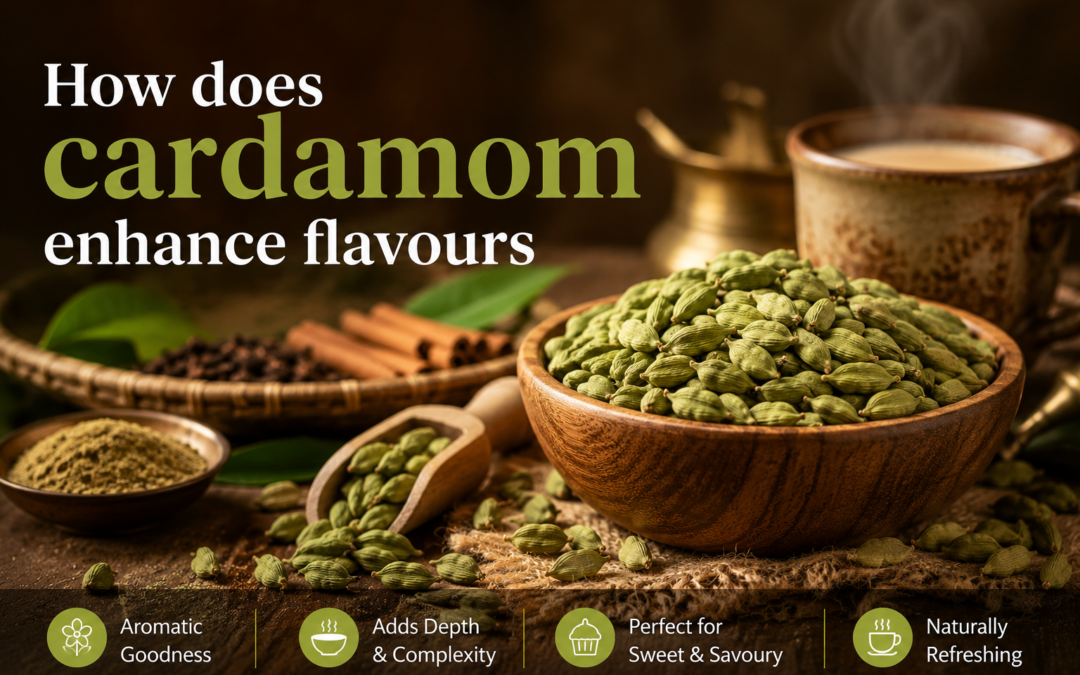
Cardamom is more than just a spice. It adds fresh aroma, subtle sweetness, warmth, and depth to foods and drinks such as tea, coffee, sweets, biryani, desserts, and bakery products. Understanding how cardamom enhance flavours explains why this spice is valued in kitchens and food businesses worldwide.
Known as the “Queen of Spices,” cardamom works in both sweet and savoury recipes. Its complex aroma comes from natural compounds such as 1,8-cineole and α-terpinyl acetate, which give it fresh, sweet, warm, floral, and citrus-like notes.
This combination allows cardamom to enhance flavours without overpowering other ingredients. However, quality matters. Premium cardamom with good colour, freshness, strong aroma, and consistent grading can deliver a more reliable flavour experience.
With more than 50 years of expertise, Ritz Brothers supplies premium-quality green cardamom with rich aroma, multiple grades, and reliable supply. In this article, we explore how cardamom enhances flavours, why its aroma is so important, and why premium quality matters.
What Is Cardamom?
Cardamom is an aromatic spice that comes from plants in the ginger family, Zingiberaceae. Green cardamom, scientifically known as Elettaria cardamomum, is especially valued for its sweet, fresh, and distinctive aroma. These qualities are a key reason why cardamom enhance flavours in a wide range of foods and beverages.
The spice is usually sold as small green pods containing tiny dark seeds. Both the pod and seeds contain aromatic compounds, while the seeds hold much of the essential oil responsible for cardamom’s characteristic fragrance. These natural oils are an important part of how cardamom enhance flavours when used in cooking and food preparation.
When cardamom pods are crushed, ground, heated, or added to food, their aromatic compounds become easier to detect. This is why freshly crushed cardamom can have a much stronger fragrance than cardamom that has been ground and stored for a long time. Freshness is therefore important when you want cardamom to enhance flavours effectively.
Cardamom is used in many types of food and drinks, including tea, coffee, biryani, rice dishes, Indian sweets, cakes, cookies, bread, desserts, ice cream, spice blends, milk-based drinks, and premium beverages. Its ability to work with both sweet and savoury ingredients is one of its greatest strengths.
Whether it adds fragrance to a cup of tea, depth to biryani, or a fresh aromatic note to a dessert, cardamom enhance flavours by adding another layer to the overall taste and aroma of a dish. This versatility is one of the reasons cardamom remains an important and highly valued spice.
Why Is Cardamom Called the Queen of Spices?
Cardamom has earned its famous title because of its distinctive aroma, flavour, and versatility. Unlike spices that mainly provide one strong characteristic, cardamom can bring several sensory qualities together in a single ingredient.
Many spices have one dominant characteristic. For example, a spice may mainly provide heat, bitterness, earthiness, sweetness, smokiness, or colour. Cardamom, however, can contribute several of these sensory qualities at once.
It can add aroma, freshness, subtle sweetness, warmth, floral notes, citrus-like notes, herbal character, and depth. This combination is one reason cardamom enhance flavours so effectively in different types of food and beverages.
The result is a spice that works well in both sweet and savoury foods. From tea and desserts to biryani and other rice dishes, cardamom can complement the natural flavours of other ingredients without overpowering them.
This makes cardamom particularly useful when a recipe needs more than just a strong spice taste. Instead of simply adding heat or intensity, cardamom enhance flavours by adding another layer of aroma, freshness, and complexity to the overall dish.
How Does Cardamom Enhance Flavours?
Cardamom enhances flavour mainly through its rich and complex aromatic compounds. When we eat or drink something, flavour is not experienced through taste alone. Our sense of smell also plays an important role in how we perceive the overall flavour of food and beverages.
This is why the aroma of freshly brewed cardamom tea can make such a noticeable difference. Even before taking the first sip, the fragrance of cardamom can influence how we experience the drink.
Cardamom contains volatile aromatic compounds that are released when the pods are crushed, ground, heated, or added to food. These compounds reach our nose and create the distinctive fragrance associated with cardamom. This is one of the main ways cardamom enhance flavours in different recipes.
Research on green cardamom has found that its essential oil contains oxygenated monoterpenes, with 1,8-cineole and α-terpinyl acetate among its important compounds. The exact composition can vary depending on factors such as variety, growing conditions, origin, and processing.
This is important because cardamom does more than simply add a spicy taste. Its main strength is its aroma. The fresh, sweet, warm, floral, citrus-like, and slightly herbal notes can complement other ingredients and make a dish or beverage feel more balanced and complex.
In simple terms, cardamom enhance flavours by adding an aromatic layer that works alongside the natural taste of the food rather than simply overpowering it.
The Main Flavour Compounds in Cardamom
1. 1,8-Cineole
1,8-Cineole is one of the major volatile compounds found in cardamom. It is also known as eucalyptol. In cardamom, it contributes strongly to the characteristic fresh and aromatic profile. Research has repeatedly identified 1,8-cineole as one of the major constituents of cardamom essential oil. This compound helps explain why cardamom can have a clean, fresh, slightly cooling aroma and is one of the reasons cardamom enhance flavours in food and beverages.
2. α-Terpinyl Acetate
α-Terpinyl acetate is another important compound in green cardamom. It is closely associated with the sweet, pleasant character of cardamom aroma. Studies have identified α-terpinyl acetate as one of the major constituents of green cardamom essential oil, although its concentration can vary among samples and growing conditions. The combination of α-terpinyl acetate and 1,8-cineole is particularly important to the characteristic aroma of small green cardamom.
Together, these compounds help explain how cardamom enhance flavours by adding a distinctive aromatic layer rather than simply contributing a strong spicy taste.
3. Other Aromatic Compounds
Cardamom contains many other volatile compounds, including:
- Linalool
- Linalyl acetate
- Limonene
- Sabinene
- α-pinene
- β-pinene
- α-terpineol
- Nerolidol
- Myrcene
These compounds occur in different amounts depending on the cardamom variety, origin, maturity, storage, and processing conditions. Together, they create a complex aroma.
This complexity is one of the reasons cardamom can be noticed even when only a small quantity is used. It also explains why cardamom enhance flavours across a wide range of foods and beverages, from tea and coffee to sweets, desserts, bakery products, and savoury dishes.
Why Does Cardamom Smell So Strong?
Cardamom contains volatile aromatic oils. “Volatile” simply means that these compounds can move into the air relatively easily. When you open a container of fresh cardamom, some of these compounds reach your nose. That is why you can smell cardamom before you even taste it. The same thing happens when cardamom is crushed or heated. More aroma is released, which is one of the key ways cardamom enhance flavours in food and beverages.
This explains a common cooking experience:
Whole cardamom pods can smell subtle until they are crushed or heated. Once they are opened, their aroma becomes much more noticeable.
The aroma then becomes part of the overall flavour experience. This strong and distinctive fragrance is one reason cardamom works so well in tea, coffee, desserts, sweets, biryani, and other dishes.
This is also why freshness matters.
Over time, aromatic compounds can be lost or changed during storage. Good storage and careful handling help preserve the sensory quality of the spice, allowing cardamom enhance flavours effectively when it is used in different recipes.
How Cardamom Balances Other Flavours
One of the most useful qualities of cardamom is its ability to work well with other ingredients. It does not always need to be the main flavour. Instead, it can support and complement the flavours around it, which is one reason cardamom enhance flavours so effectively.
For example, in a rich dessert, cardamom can add freshness and a pleasant aroma. In a strong tea, it can add sweetness and fragrance. In biryani, it can contribute another layer of aroma to the rice and spices. In coffee, its fragrant character can complement the natural bitterness of the drink.
This is why cardamom is often described as a flavour enhancer. It does not simply make food “taste like cardamom.” When used carefully, cardamom enhance flavours by adding depth and aroma while allowing the other ingredients to remain noticeable.
The key is balance. The right amount of cardamom can make the overall flavour feel more complete without overpowering the main ingredients.
How Cardamom Enhances Different Foods and Drinks
Cardamom in Tea
Cardamom and tea are a classic combination. The warm flavour of tea works well with cardamom’s fresh and aromatic character. A small amount can transform ordinary tea into a fragrant drink. Cardamom is especially popular in spiced milk tea and other traditional tea preparations.
The spice can contribute fresh aroma, sweet fragrance, warm spice notes, and greater complexity. This is one reason cardamom enhance flavours in tea and why it is widely used by households, restaurants, cafés, and beverage producers.
Cardamom in Coffee
Cardamom can also be paired with coffee. Coffee naturally has roasted, bitter, nutty, and sometimes chocolate-like notes. Cardamom introduces a contrasting aromatic quality. Its fresh and sweet fragrance can create a more complex cup.
This does not mean cardamom removes coffee’s bitterness. Instead, it adds another sensory layer. The result can feel more aromatic and balanced. This ability to complement the natural character of another ingredient shows how cardamom enhance flavours without overpowering the original taste.
Cardamom in Biryani
Biryani contains many powerful ingredients. Rice, meat or vegetables, onions, herbs, and spices all contribute to its final flavour. Cardamom adds an important aromatic layer. Whole green cardamom pods are often added during cooking so that their aroma can spread through the rice and other ingredients.
Unlike a spice that mainly adds heat, cardamom contributes fragrance. That fragrance can be noticed as soon as the biryani is served. This is one reason cardamom is an important ingredient in many traditional rice dishes and demonstrates how cardamom enhance flavours in savoury recipes.
Cardamom in Indian Sweets
Cardamom is widely associated with Indian sweets. It works particularly well with ingredients such as milk, sugar, nuts, ghee, rice, flour, and coconut.
Traditional sweets often need an aromatic ingredient to balance their richness. Cardamom performs that role very well. A small amount can give a sweet a distinct fragrance without changing its basic identity.
This is why cardamom is common in preparations such as milk-based sweets, rice puddings, cakes, and other desserts.
Cardamom in Desserts
CCardamom is not limited to traditional Indian sweets. It can also be used in modern desserts.
Its aromatic profile works well with chocolate, vanilla, cream, milk, coconut, almond, pistachio, honey, citrus, and fruits.
The spice can give a familiar dessert a more sophisticated character. For example, a simple milk-based dessert can become more fragrant with a small amount of freshly ground cardamom.
The key is moderation. Too much cardamom can dominate delicate ingredients. The goal is usually to add an aromatic layer rather than cover every other flavour.
Cardamom in Bakery Products
Cardamom can also enhance baked foods. It can be used in cakes, cookies, breads, pastries, biscuits, and muffins.
Heat releases aroma from the spice during baking. As the product cooks, the kitchen can fill with the characteristic smell of cardamom. This aroma becomes part of the eating experience.
Cardamom can also work well with sugar, butter, milk, nuts, and vanilla. That makes it useful for both traditional and contemporary bakery products and further highlights how cardamom enhance flavours across different types of food.
Why Does Cardamom Work in Both Sweet and Savoury Foods?
This is one of the most interesting things about cardamom. It has enough complexity to fit into very different recipes and complement a wide range of ingredients.
In sweet foods, its fragrant character can complement sugar, dairy, nuts, fruits, and other dessert ingredients. In savoury foods, its fresh aroma can complement rice, meat, vegetables, herbs, and other spices.
Cardamom does not have to be associated with only one flavour category. Its versatility comes from its complex aromatic profile. The spice contains many volatile compounds rather than a single dominant flavour molecule. Research shows that cardamom’s chemical profile can contain numerous compounds, with the balance varying according to species, variety, geography, cultivation, and processing.
This complex combination is also one reason cardamom enhance flavours in such a wide range of foods. Rather than adding only one strong taste, cardamom can introduce freshness, warmth, sweetness, and aromatic depth.
Whether it is used in a sweet dessert or a savoury rice dish, cardamom enhance flavours by complementing the ingredients around it. This versatility makes it a valuable spice for both traditional recipes and modern food products.
Does the Quality of Cardamom Affect Flavour?
Yes.
The quality of cardamom can affect aroma, freshness, appearance, and overall culinary performance.
Premium quality cardamom supply has characteristics such as:
- Strong aroma
- Better flavour
- Longer freshness
- Bright green appearance
- Uniform pods
- Clean finish
- Natural shine
Hence, premium-quality cardamom can provide better flavour, stronger aroma, better shelf life, and attractive appearance. These qualities also influence how effectively cardamom enhance flavours in different food and beverage applications.
For businesses, these differences matter.
A restaurant needs consistency.
A bakery needs reliable flavour.
A beverage manufacturer needs predictable raw material.
An exporter needs products that meet the expectations of its customers.
This is why selecting a dependable cardamom supplier is important.
Ritz Brothers is a trusted premium-quality cardamom supplier with more than 50 years of expertise in the cardamom trade.
Premium cardamom is not simply about size.
Several factors can affect its perceived quality.
Colour
Green colour is an important visual characteristic of green cardamom.Bright, uniform pods can indicate desirable quality characteristics.The bright green appearance, uniform pods, clean finish, and natural shine are quality indicators.
Pod Size
Cardamom can be sorted into different grades.
- Small: 6–7 mm
- Medium: 7–8 mm
- Premium: 8 mm and above
Larger pods generally command higher prices.
However, size alone does not tell the complete story.
A good buying decision should also consider aroma, freshness, colour, consistency, and intended application.
Why Freshness Matters in Cardamom
Freshness is particularly important for aromatic spices. Cardamom’s value comes largely from its fragrance. If the aromatic compounds are reduced through poor storage or prolonged exposure to unsuitable conditions, the spice may not deliver the same sensory experience. This is why whole pods are often preferred when longer storage is required. They provide more protection to the aromatic seeds than fully ground cardamom.
When needed, the pods can be opened or crushed before use. This helps release their aromatic compounds and allows cardamom enhance flavours more effectively in different foods and beverages.
For commercial buyers, freshness and supply consistency become even more important. A restaurant cannot afford one batch to have a strong aroma and the next batch to taste flat. The same is true for food manufacturers. Consistent raw materials help create consistent finished products.
Does Processing Affect Cardamom’s Aroma?
Yes.
Processing can influence the chemical composition of cardamom’s volatile oils and, in turn, affect its aroma and how cardamom enhance flavours in different food and beverage applications.
Research examining cardamom during drying has found that compounds such as 1,8-cineole and α-terpinyl acetate remain important components of its aroma profile, while processing conditions can affect aroma composition.
This is important because cardamom goes through several stages before it reaches a consumer.
These can include:
- Cultivation
- Harvesting
- Sorting
- Processing
- Drying
- Grading
- Packaging
- Storage
- Distribution
Every stage can influence the final product.
Good handling helps protect the characteristics that buyers value, including freshness, aroma, and flavour. This is particularly important for premium cardamom, where preserving its natural aroma helps cardamom enhance flavours effectively.
Why Careful Grading Matters
Grading helps buyers identify and purchase cardamom according to specific requirements.
Different customers may want different grades.
For example:
A restaurant may want consistent medium or premium pods.
A premium retailer may focus strongly on appearance.
A food manufacturer may have requirements based on application and volume.
An exporter may need specific grading and packaging standards.
A reliable supplier should therefore be able to offer consistent grades.
Multiple grades, fresh supply, bulk availability, and consistent quality are important considerations when choosing a cardamom supplier. These factors also help ensure that cardamom enhance flavours consistently across different food and beverage applications.
RITZ Brothers ensures the supply of premium-quality cardamom that meets all the above-mentioned considerations.
How to Get the Best Flavour From Cardamom
You do not always need a large quantity of cardamom to make a difference. In fact, using too much can overpower other ingredients. Here are some simple ways to get more flavour from the spice while allowing cardamom enhance flavours naturally.
Use Fresh Cardamom
Fresh cardamom generally provides a more noticeable aroma than old or poorly stored spice.
Crush the Pods Before Use
Lightly crushing a whole pod can help release its aromatic oils and allow cardamom enhance flavours more effectively.
Grind Only What You Need
Ground cardamom exposes more surface area to air.
For this reason, freshly ground cardamom is often preferred when strong aroma is important.
Use the Right Amount
Cardamom is powerful.
Start with a small amount.
You can always add more.
Store It Properly
Keep cardamom away from excessive heat, moisture, light, and strong odours.
Good storage helps protect its aroma.
Cardamom and the Science of Aroma
The reason cardamom has such a strong effect on flavour becomes clearer when we look at aroma chemistry. The essential oil of green cardamom contains multiple volatile compounds. Studies have identified 1,8-cineole and α-terpinyl acetate as important components, along with compounds such as limonene, linalool, sabinene, pinene, and others.
These compounds do not all smell or behave in the same way. Instead, they combine to create a complex sensory profile. This combination is one reason cardamom enhance flavours in a wide range of foods and beverages.
This is similar to music. A song is not defined by one note. Many notes work together to create the final sound. Cardamom works in a similar way. Many aromatic compounds combine to create the characteristic cardamom experience and help cardamom enhance flavours without relying on a single flavour compound.
The balance of these aromatic compounds can vary depending on factors such as variety, growing conditions, origin, processing, and storage. This is why quality and freshness matter when choosing cardamom. When these characteristics are well preserved, cardamom enhance flavours by adding a distinctive layer of aroma and complexity to the overall food or beverage experience.
Why Aroma Can Make Food Taste Better
Taste and smell work together. Your tongue detects basic taste, but aroma contributes much more information to the overall experience of flavour. This is why food can seem less flavourful when your sense of smell is reduced. Cardamom enhance flavours by taking advantage of this connection.
Its aromatic compounds create a strong smell that becomes part of how we perceive the food or drink. So when cardamom is added to tea, dessert, or biryani, it does more than add a spice taste. It changes the aroma reaching the nose. That can make the entire dish seem richer and more complex.
Cardamom as a Flavour Enhancer in Modern Food Products
Cardamom has applications beyond home cooking.
The spice is also useful for commercial food and beverage products. Its distinctive aroma and flavour can help cardamom enhance flavours across a wide range of products.
Potential applications include:
- Packaged beverages
- Bakery products
- Desserts
- Confectionery
- Spice blends
- Restaurant dishes
- Ready-to-eat foods
- Premium food products
Food manufacturers need raw materials that perform consistently. When cardamom enhance flavours in a commercial product, maintaining consistent quality becomes especially important.
A product that smells different from batch to batch can create an inconsistent customer experience. This is why suppliers matter. The quality of the raw cardamom can affect the aroma and flavour of the final product and determine how effectively cardamom enhance flavours in the finished product.
Why Businesses Need a Reliable Cardamom Supplier
Buying spices for commercial use is different from buying a small packet for home cooking.
Businesses may require:
- Large quantities
- Consistent grades
- Reliable quality
- Fresh stock
- Professional packaging
- Timely delivery
- Export-ready products
- Long-term supply support
From the client perspective, these are important benefits of working with a trusted supplier, including consistent quality, reliable grading, competitive pricing, fresh stock, timely delivery, professional packaging, export-ready products, and long-term business support. These factors also help ensure that cardamom enhance flavours consistently across different batches and applications.
For a business, consistency can be just as important as price.
A lower-cost spice is not necessarily better if its flavour changes significantly between batches. For food manufacturers, restaurants, bakeries, and beverage companies, consistent-quality cardamom can help maintain the expected flavour and aroma of the final product.
Premium food is often about detail.
Small differences in aroma, freshness, texture, and ingredient quality can affect the final experience.
Cardamom fits naturally into this idea.
A high-quality cardamom pod can contribute strong aroma without requiring large quantities.
This makes it useful for premium:
- Desserts
- Beverages
- Bakery products
- Spice blends
- Restaurant dishes
For businesses that sell food based on flavour and quality, the quality of their spices matters.
A premium product starts with good ingredients.
Cardamom Is More Than Just a Spice
Cardamom is often placed beside other common spices on a kitchen shelf. But its role is different. It is not simply an ingredient that adds heat. Cardamom enhance flavours in a unique way as it is an aromatic ingredient.
It can influence the smell, taste, and overall perception of a dish. Its natural compounds create a complex profile that can work with both sweet and savoury ingredients. This is one reason cardamom enhance flavours across a wide range of recipes, from tea and desserts to biryani and other traditional dishes.
This ability to add aroma and complexity without overpowering other ingredients explains why cardamom enhance flavours so effectively. It also explains why cardamom continues to be valued across traditional cooking and modern food production.
Frequently Asked Questions About Cardamom
Why does cardamom enhance flavour?
Cardamom enhance flavours because it contains aromatic volatile compounds that contribute fresh, sweet, warm, herbal, and citrus-like notes. These aromas interact with the overall flavour of food and drinks, making them more complex and fragrant.
What makes cardamom so aromatic?
Cardamom contains essential oils rich in compounds such as 1,8-cineole and α-terpinyl acetate. These compounds help cardamom enhance flavours, while linalool, limonene, sabinene, and pinene also contribute to its overall aroma.
Why is cardamom called the Queen of Spices?
Cardamom is called the Queen of Spices because of its distinctive aroma, flavour, versatility, and premium value. Its unique aromatic profile is also one of the reasons cardamom enhance flavours across a wide range of foods and beverages. It can be used in tea, coffee, sweets, desserts, biryani, bakery products, spice blends, and beverages.
Does cardamom make food sweeter?
Cardamom does not simply add sugar-like sweetness. Its aromatic profile can create a sweet-smelling and fragrant impression, especially when combined with ingredients such as milk, sugar, nuts, and desserts.
Can cardamom be used in savoury dishes?
Yes. Cardamom is widely used in savoury foods such as biryani and other rice and spice-based dishes. Its aroma can add depth without relying mainly on heat.
Is green cardamom stronger than other spices?
Strength depends on the specific spice and its application. Green cardamom is particularly valued for its distinctive aroma and complex flavour rather than for strong heat.
Does cardamom quality affect flavour?
Yes. Freshness, aroma, colour, size, grading, and storage can influence the quality and culinary performance of cardamom. Premium cardamom is generally valued for stronger aroma, better flavour, freshness, and consistent quality.
Is whole cardamom better than ground cardamom?
Neither is automatically better. Whole cardamom is useful for slow release of aroma during cooking and can retain its aromatic seeds inside the pod. Ground cardamom is convenient for baking, desserts, sweets, and recipes where an even distribution is needed.
How should cardamom be stored?
Store cardamom in a clean, dry, airtight container away from excessive heat, moisture, direct light, and strong-smelling foods. Proper storage helps protect its aroma and freshness.
Where can businesses buy premium cardamom?
Businesses should look for an experienced supplier that can provide consistent quality, multiple grades, fresh stock, bulk availability, appropriate packaging, and reliable supply. RITZ Brothers has more than 50 years of experience in cardamom trade. We provide a reliable supply of premium quality green cardamom of multiple grades which has a rich aroma.
Conclusion
Cardamom plays an important role in enhancing flavours because it brings something that many spices cannot provide in the same way: complex aroma.
Its natural volatile compounds, especially 1,8-cineole and α-terpinyl acetate, contribute to its characteristic fragrance. Other aromatic compounds add further layers to its sensory profile.
This allows cardamom to work across a wide range of foods and beverages.It can make tea more fragrant.It can add depth to coffee.It can give biryani a distinctive aroma.It can balance rich sweets.It can transform cakes, cookies, desserts, and bakery products.But the quality of the cardamom matters.Freshness, colour, pod size, grading, aroma, storage, and supply consistency all play a role in the final product.For businesses, choosing the right supplier is therefore an important part of maintaining quality.Ultimately, cardamom does not need to dominate a dish to make a difference.Its strength is in adding a carefully balanced layer of fragrance and flavour. That is what makes this small spice so valuable — and why cardamom continues to hold its place as the Queen of Spices.
Contact RITZ Brothers for supply of premium quality green cardamom or connect with us on LinkedIn